
Most small business owners I meet are running their entire business from a single spreadsheet. They’re proud of it — and rightfully so, it took real effort to build. But spreadsheets have a hidden cost most people don’t see until they switch to something better.
The conversation almost always starts the same way: “I know I should switch to Xero, but my spreadsheet works fine.” And that’s true — until it isn’t. Here’s what actually changes when you make the move, and why most clients tell me they wish they’d done it sooner.
The Real Cost of “It Works Fine”
Spreadsheets feel free, but they aren’t. They’re paid for in hours, errors, and missed opportunities. Let me show you what I mean.
1. Manual Entry Eats Your Time
Every transaction in a spreadsheet has to be typed in. Every receipt categorised. Every line double-checked. If you have 30 transactions a week, that’s at least an hour of typing — before you’ve even reviewed anything. Multiply that across a year and you’re losing entire workweeks to data entry.
2. Errors Hide Until They Hurt
One wrong formula, one missed row, one accidentally deleted cell — and your numbers are off without you knowing. I’ve seen business owners discover six months later that a single broken formula had inflated their profit estimates by thousands of dollars. Spreadsheets don’t tell you when something’s wrong. They just keep going.
3. You Can’t See Your Business in Real Time
By the time your spreadsheet is updated, the information is already old. You’re making today’s decisions based on last week’s data. That gap is the difference between reacting and being in control.
“The question isn’t whether you can afford to switch to Xero. It’s whether you can keep affording not to.”
What Actually Changes With Xero
I’ve watched dozens of business owners go through this transition. Here’s what shifts in the first 30 days.
Your Bank Talks to Your Books Automatically
Xero connects directly to your bank account. Every transaction shows up in your books within hours, automatically. No typing, no copying, no end-of-month catch-up. The first time you log in and see two weeks of transactions already waiting for you to categorise — that’s the moment most people realise what they’ve been missing.
Reports That Actually Make Sense
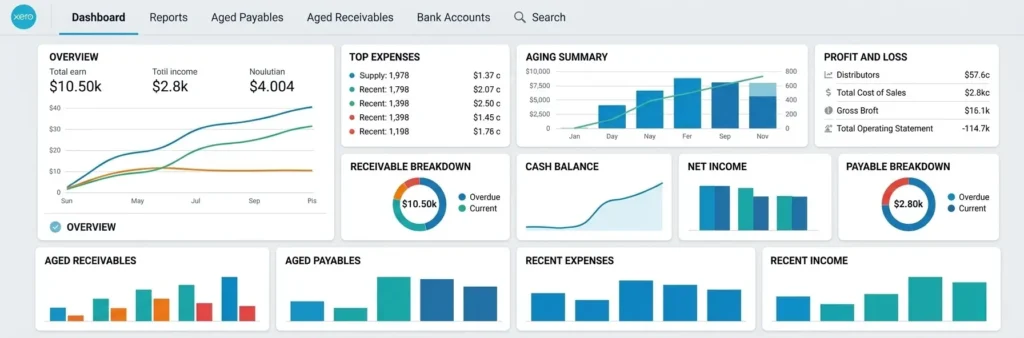
A profit and loss report in Xero takes one click. Same for cash flow, balance sheet, and invoice tracking. In a spreadsheet, building those reports yourself takes hours — and the moment you change one number, half of it breaks.
You Can Work From Anywhere
Xero is in the cloud. That means your books are accessible from your phone, your laptop, or your accountant’s office — all looking at the exact same data, in real time. No more “let me email you the latest version” or hunting for which file is the most recent.
“But What About the Migration?”
This is the question that keeps most people stuck. The good news: if your spreadsheet is reasonably organised, the migration to Xero usually takes less than a week. We import your historical data, set up your bank feeds, and configure your chart of accounts based on how your business actually runs.
- Setup is one-time, not recurring. A few hours of focused work upfront, and then it just runs. Compare that to the dozens of hours a year you currently spend maintaining a spreadsheet.
- You don’t lose your data. Everything from your spreadsheet can be imported. Your historical numbers are still there — just in a system that actually does something with them.
- You don’t have to learn it all at once. Most clients only use 20% of Xero’s features. We set you up with what you need, and the rest is there if and when you grow into it.
So, Is It Worth It?
If you’re managing under 10 transactions a month, honestly — no. Stick with the spreadsheet, save your money. But if your business is past that point and you’re still spending evenings updating cells, the math is brutal. The hours you save in the first three months alone usually pay for the switch several times over.
The harder cost to measure is the one most owners don’t realise they’re paying: the decisions you don’t make because you don’t trust your numbers, the opportunities you miss because the data is too messy to act on. That’s what spreadsheets really cost. Xero just makes it visible.